Welcome to TEASIDE!
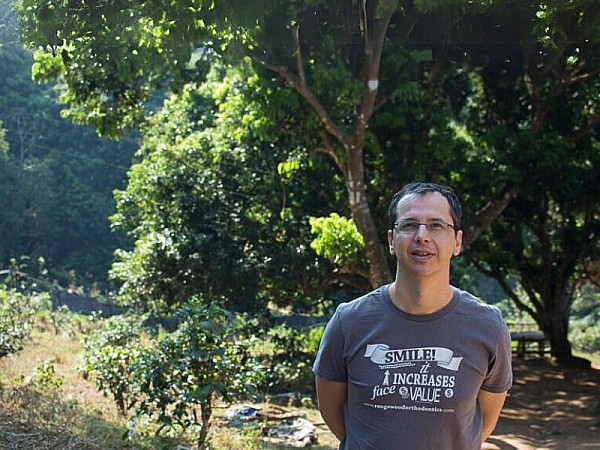
I'm Valerii Levitanus, the co-founder of TEASIDE. Since 2012, we have been discovering, producing, and selling rare teas from the "Golden Triangle" to the world.
Our warehouse and Pu-erh tea workshop, where we ferment our Shu Pu-erhs, are located in Chiang Mai, in northern Thailand.
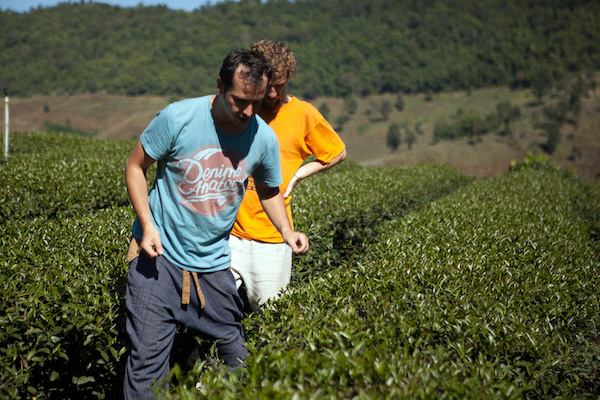
Chiang Mai is situated close to forests with tea trees and numerous Oolong plantations.
Northern Thailand is a unique tea-place.
There are three tea-making provinces in Thailand, by and large: Chiang Rai, Chiang Mai, and Mae Hong Son. These provinces share common borders and make up a single place. This means the diversity of Thai teas, all oolongs, pu-erhs, greens, blacks and whites, are produced in one relatively small area, comparing to China, for example. And this is indeed a unique phenomenon.
Our Story
TEASIDE began with the Oolongs of Mae Salong. Mae Salong is the heart of the "Golden Triangle", where opium was grown in the mountains until the late 70s. Today, it’s the Oolong "Mecca" of Thailand.
I tried dozens of Thai teas before we found the true masterpieces of tea-making and decided to start a tea business. Right from the start, my vision was to sell our teas worldwide. So we set the quality bar high, as I planned us to successfully compete with China and Taiwan.
By 2013, we were adventuring deep into the jungles, discovering ancient wild tea trees – that’s when our Pu-erh story began.
Own Craft Shu Pu-erh Production
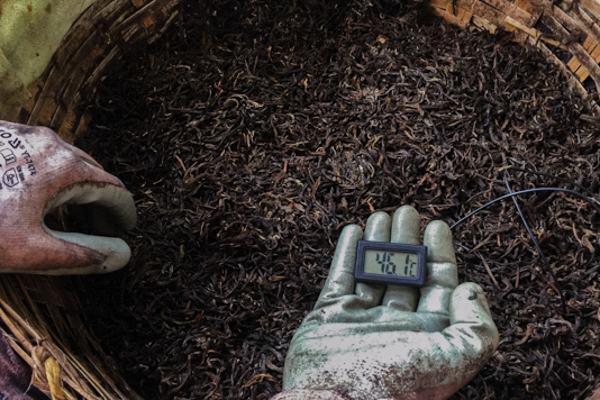
The lack of Ripe Pu-erh varieties from local farmers prompted us to start our own Shu production. In 2013 we started to develop my own technology for fermenting pu-erh in small baskets. We used (and still using exclusively) Thai material from old trees.
At that time, the production of Shu from trees in small baskets was unheard of even in China. Now, it's gradually becoming a trendy practice, but to my knowledge, we remain the only ones who work with baskets of 5-8 kg. It took us years to master the technique. Such a small volume for fermentation allows for precise control over the process, which helps to achieve unique organoleptic properties and a recognizable signature flavor.
About Our Tea
Our logo says “pure & rare”, and this is the foundation of our concept. We value the honest taste of pure tea and don’t sell flavored blends. Our range includes rare, sometimes unique, teas of collectible quality.
Our source is Thailand.
We work directly with tea factories, participate in tastings and evaluations of new varieties. Each season we select only the best, successful batches for our shop—usually it's just two or three from each producer. Some teas we develop and produce ourselves.
We focus on organic tea. Some factories we work with have USDA Organic or other organic certificates. There are also small family farms that can't afford expensive certification but still avoid using inorganic fertilizers. We collaborate with these farms too, inspecting them personally.
The production of tea from trees (pu-erh style tea and mostly all other kinds apart from oolongs) has its own aspects. Thai trees grow in natural forests with rich soils. Local farmers have no shortage of the material and no need to spend on fertilizers. Thus, thanks to the prevailing local growing and production conditions, Thai tea from trees is naturally organic. Only a few Pu-erh factories invest in organic certification. By the way, there are no Assamica (tai di cha) plantations in Thailand, only trees.
Read about us in interviews